Beaded Jewelry: How to Make Bracelets, Necklaces, and Rings with Beads
Beads are one of the most versatile materials in jewelry making. Thread them on elastic and you have a bracelet in 20 minutes. Wire-wrap a gemstone bead and you have a necklace that looks like it came from a boutique. Make your own from paper and you’ve turned scraps into something wearable.
I’m Muhaimina Faiz. This page brings together every beaded jewelry tutorial I’ve published, grouped by project type so you can find the right one for where you are right now.
Jump to all tutorials or read through to figure out which type of beaded jewelry to start with.
Where to Start with Beaded Jewelry
The biggest advantage of beaded jewelry over other jewelry-making styles is that the entry point is genuinely low. You don’t need pliers, wire skills, or any special tools to make your first piece. A length of elastic cord and a handful of beads is enough to make something you’ll actually wear.
That said, beadwork spans a wide skill range. Simple stringing projects take minutes. Intricate seed bead weaving can take days. The table below gives you a quick sense of where each type sits so you can match the project to your current patience and skill level.
| Project Type | Time | Key Skill | Best For |
|---|---|---|---|
| Elastic bead bracelet | 15–20 min | Stringing | Absolute beginners |
| Adjustable cord bracelet | 30–45 min | Sliding knot | Beginners learning knots |
| Flower / daisy chain bracelet | 45–60 min | Patterned stringing | Beginners with patience |
| Beaded necklace | 45–90 min | Stringing + clasps | Intermediate beginners |
| Gemstone necklace | 30–45 min | Basic wire wrapping | Intermediate |
| Beaded wire ring | 30–45 min | Wire shaping | Intermediate |
| Paper bead jewelry | 1–2 hrs | Rolling + sealing | Anyone who likes making materials |
Your first beaded bracelet should be elastic cord. No clasp to fumble with, no knot technique to learn. Thread your beads, tie a surgeon’s knot, and tuck the tail inside a bead. You’ll have a finished piece in under 20 minutes, and that momentum matters when you’re just starting.
All Beaded Jewelry Tutorials
Beaded Bracelets
Bracelets are the most-made beaded jewelry project on this site, and for good reason. They’re small enough to finish in a single sitting, you can experiment with colors and patterns cheaply, and they stack well so every extra pair you make gets worn. These tutorials cover the most popular styles from simple elastic bracelets to more structured knotted designs.

How to Make Beaded Bracelets with Adjustable Cord (2 Ways)
The adjustable sliding knot means one bracelet fits any wrist. Two knotting methods covered — pick the one that feels most intuitive. A solid foundation tutorial that applies to almost every cord bracelet you’ll ever make.
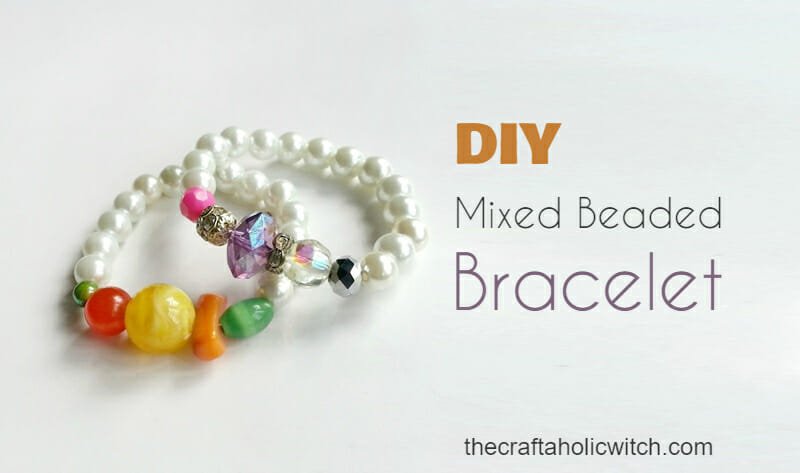
Mixed Beaded Bracelet
Random mixed beads, one cord, no pattern to follow. The mix is what makes it. Good for using up odds and ends from your bead stash and getting a result that looks genuinely eclectic rather than messy.

Flower Bead Bracelet (Daisy Chain)
Seed beads arranged into tiny flower clusters along the length of the bracelet. It looks intricate but the pattern repeats, so once you’ve made the first flower, the rest follows naturally. Delicate and genuinely beautiful to wear.
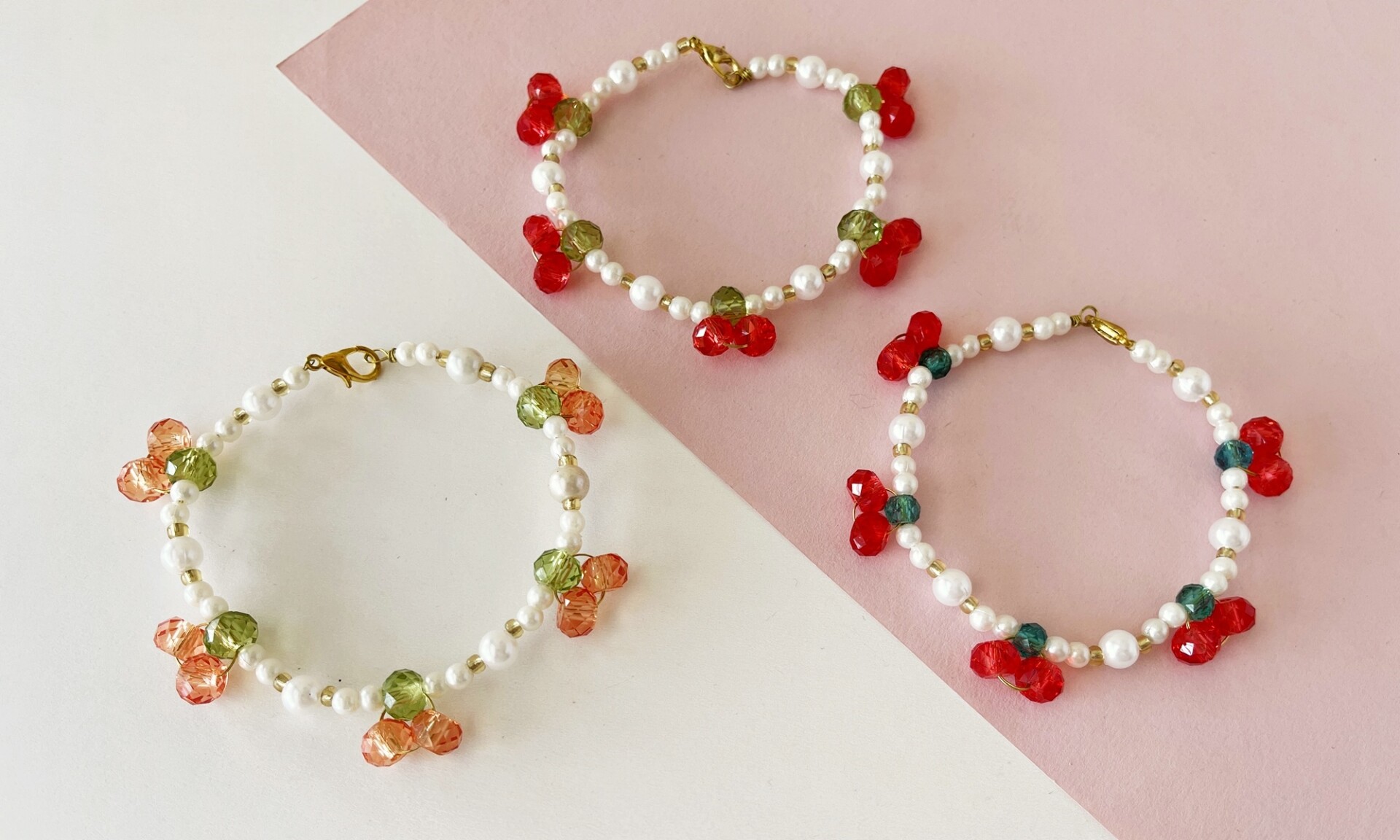
Cherry-Inspired Beaded Bracelet (with Video)
Red and green beads shaped into a cherry motif. One of the more playful projects on this site and one that gets noticed. Includes a video so you can follow the construction step by step. Great for crafters of any level.

How to Make Rosary Bracelets (Doubles as a Necklace)
A linked bead structure that works as both a bracelet and a long necklace. The design is structured and elegant, and the technique teaches you how to work with eye pins — a skill that carries into a lot of other jewelry projects.
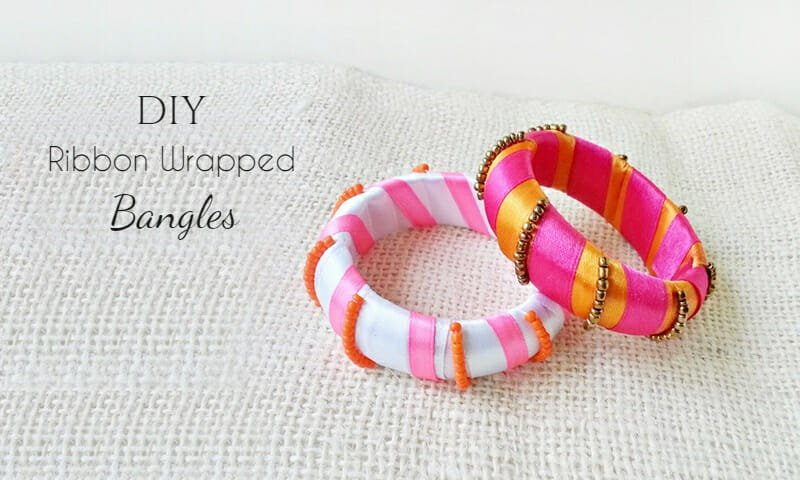
How to Make Bangle Bracelets (4 Easy Steps)
Plain bangle bases wrapped with ribbon and studded with beads. A quick way to revamp inexpensive bangles into something that looks custom-made. Stackable, colorful, and a good project for using up short ribbon lengths.
Beaded Necklaces
Necklaces take a little more planning than bracelets — you’re working with a longer length of cord or wire, and you usually need a clasp — but the result is a piece with more visual impact. These tutorials cover stringing-based necklaces and wire-wrapped gemstone designs.

How to Make Beaded Necklaces (3 Designs with Full Tutorials)
Three complete necklace tutorials in one post — different lengths, different bead arrangements, different vibes. If you want to understand how beaded necklaces are constructed across styles, start here. Covers clasp attachment and cord finishing in detail.
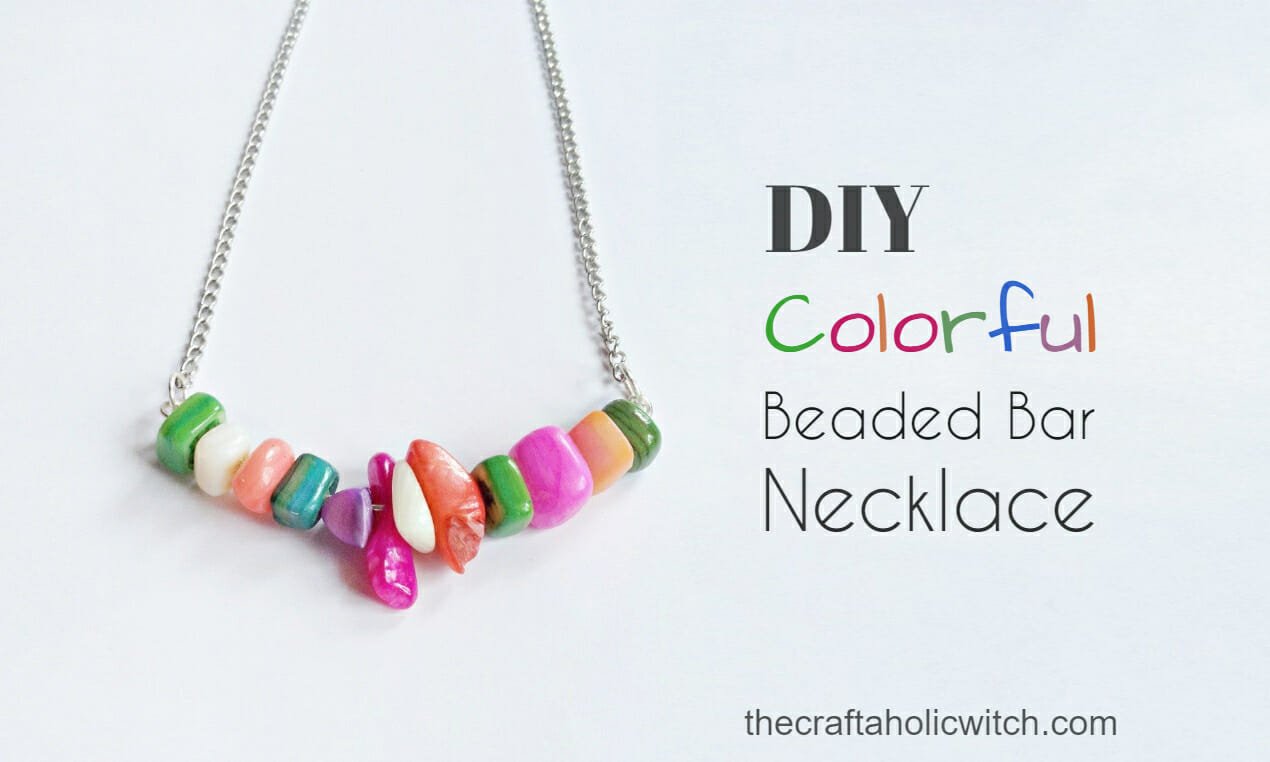
How to Make a Gemstone Necklace (4 Easy Steps)
Colorful gemstone beads on a simple cord. The beads do all the visual work — you just need to space them right and finish the ends cleanly. One of the quickest necklace projects on this site and one that looks far more expensive than it is.
Beaded Rings
Rings are the smallest project in beaded jewelry but they require more precision than bracelets or necklaces. The wire needs to be the right gauge to hold its shape, and sizing matters in a way it doesn’t for other pieces. But they’re quick to make once you have the technique, and a set of three or four wire rings worn together is a look that’s hard to replicate in a shop.

Make Your Own Beads
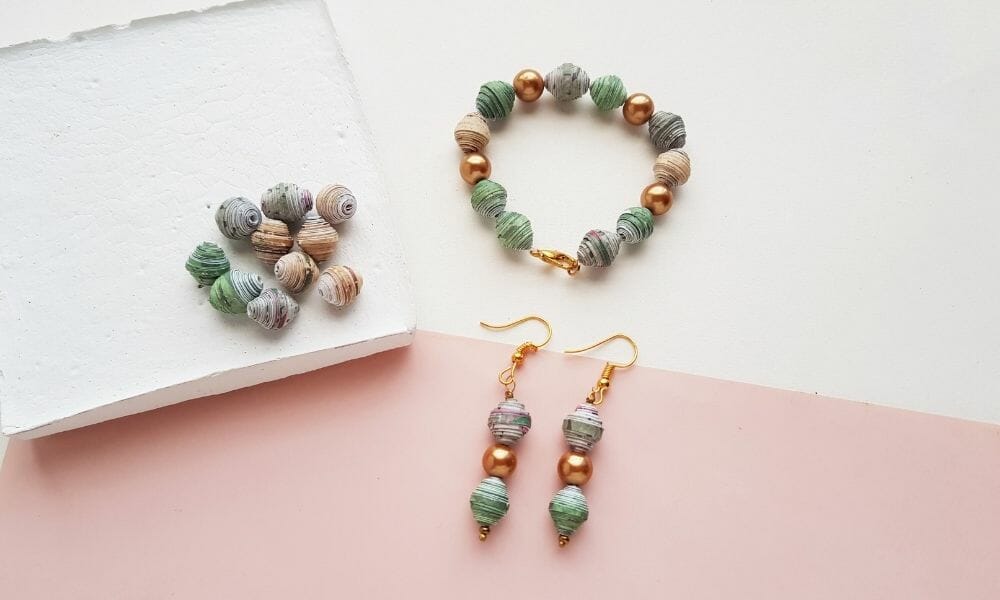
Store-bought beads are fine. But making your own is a different kind of satisfying. Paper beads are the easiest entry point — you roll strips of paper around a skewer, seal them with varnish, and end up with lightweight, colorful beads that work in bracelets and earrings. They’re also completely free if you use paper you already have at home.
Want More Patterns and Printables?
Bead pattern charts, bracelet sizing guides, and project templates are free inside Craftaholic Community. Join free and find them in the Free Templates space.
Join Craftaholic CommunityFree to join. All templates included.
What You Need to Get Started
Beaded jewelry is one of the least expensive jewelry-making categories to get into. A basic supply kit covers dozens of different projects and costs a fraction of what you’d spend buying equivalent pieces.
Cord and thread options
Elastic cord (0.8mm or 1mm) for simple stretch bracelets — no clasp needed, no knot technique to learn, just thread and tie. Waxed cotton cord or S-lon for knotted bracelets and macrame-influenced designs. Beading thread like Fireline (6lb test) for seed bead work where you’re threading through beads multiple times and need a thin, strong thread that doesn’t fray.
For necklaces: tiger tail (beading wire) gives a cleaner drape than cord and works better with heavier beads. It needs crimp beads to finish the ends rather than knots.
Beads: what to buy first
4mm to 8mm round glass or acrylic beads are the best starting point. They’re large enough to thread without a needle, consistent in size, and inexpensive enough to experiment with freely. A mixed bead kit with several colors in the same size gives you enough variety to make different projects without committing to large quantities of any single style.
Seed beads (size 11/0 is the most common) are needed for the daisy chain bracelet and beaded wire ring. They’re tiny, so you’ll need a beading needle and a bit more patience, but the results are more detailed and delicate than you can achieve with larger beads.
Gemstone beads cost more than glass or acrylic but they’re worth it for necklaces where the bead is the visual centerpiece. Amethyst, turquoise, and aventurine are all easy to find and look striking on a simple cord.
Findings and hardware
Jump rings (4mm and 6mm), lobster clasps, toggle clasps, and crimp beads cover most of what you’ll need for finishing bracelets and necklaces. Eye pins and head pins are needed for the rosary bracelet and any project where you’re making linked bead components.
Flat-nose pliers and round-nose pliers are the two tools used most in beaded jewelry. Flat-nose opens and closes jump rings without distorting them. Round-nose forms loops on eye pins and head pins. A basic set costs under $10 and lasts years.
For wire-based beaded pieces
20-gauge craft wire for the beaded wire ring and any wire-wrapped beaded components. 24-gauge for wrapping smaller beads where you need more flexibility. Both should be non-tarnish or copper-plated if you want them to look good over time. Sterling silver wire is an upgrade worth making once you’re past the beginner stage.
What to Explore Next
Beaded jewelry overlaps with a lot of other jewelry-making techniques. Once you’re comfortable with the basics here, these are the natural next steps.
- Earrings — many of the same beads and findings work for earrings. The beaded stud and hoop earring tutorials use skills you’ve already built here.
- Wire Jewelry — wire wrapping takes beaded jewelry into different territory. Wrapped stone pendants, coiled rings, and wire-framed beaded pieces all build on what you learn here.
- Bracelets — the broader bracelets hub covers non-beaded styles including macrame, leather, and chain bracelets.
- Necklaces — the full necklace hub covers chain-based and pendant necklaces alongside the beaded styles on this page.
- Back to the full Jewelry Making guide — tools, materials, and the full picture of what’s possible.
Questions People Ask
What supplies do I need to start making beaded jewelry?
Elastic cord, a selection of beads in one or two sizes, and scissors. That’s genuinely all you need for a first bracelet. For anything more structured — adjustable knot bracelets, necklaces with clasps, wire rings — you’ll add cord, findings, and basic pliers. The supplies section above goes into more detail on each category.
What cord should I use for beaded bracelets?
Elastic cord for your first bracelet — it’s forgiving and needs no clasp. Once you’re comfortable, waxed cotton cord or S-lon gives you more control and a cleaner result for knotted designs. Beading thread is better for seed bead projects where you’re passing through each bead multiple times with a needle.
How do I finish a beaded bracelet without a clasp?
Two methods. Elastic cord: tie a surgeon’s knot (two overhand knots in opposite directions), pull tight, add a drop of E6000 or clear nail polish to the knot, and tuck the tail into the nearest bead hole. Cord bracelet: tie a sliding knot (adjustable slip knot) with both cord ends, which makes the bracelet fully adjustable. The adjustable cord bracelet tutorial on this page covers both methods step by step.
What beads are best for beginners?
4mm to 8mm round glass or acrylic beads. Large enough to thread without a needle, cheap enough to experiment freely, and consistent enough in size that your finished piece looks even and intentional. A mixed bead kit in several colors is more useful than buying large quantities of one style when you’re starting out.
Can I make my own beads at home?
Yes, paper beads are the easiest. You roll strips of paper (magazine pages, wrapping paper, scrapbook paper) around a skewer, seal them with Mod Podge or clear varnish, and slide them off when dry. They’re lightweight, colorful, and completely free if you use paper you already have. The paper beads tutorial on this page covers the full process with a video.