

In this tutorial, we’ll show you how to fold a stunning origami rose in full bloom from a single sheet of paper. This craft is perfect for anyone seeking therapeutic creative projects, building advanced paper folding skills, or creating meaningful gifts through mindful crafting. These roses pair beautifully with origami hearts and origami envelopes for complete gift presentations. Plus, we’ve included a free video tutorial to help you master the challenging techniques.
Reality Check: This is not a beginner project. The complexity is actually part of the appeal because it demands focus. Start with our origami lotus or origami maple leaf tutorials if you’re new to folding.
Perfect for stress relief through crafting, building origami skills progressively, creating mindful moments away from screens, making therapeutic gifts for loved ones, or advancing from basic origami to intermediate techniques.
Project Specifications:
Difficulty Level: Intermediate (looks complex but achievable with practice)
Cost: Under $1 (just one sheet of paper)
Time: 15-20 minutes for first attempt, 8-10 minutes once mastered
Ages: 10+ years (may need adult guidance for complex folds)
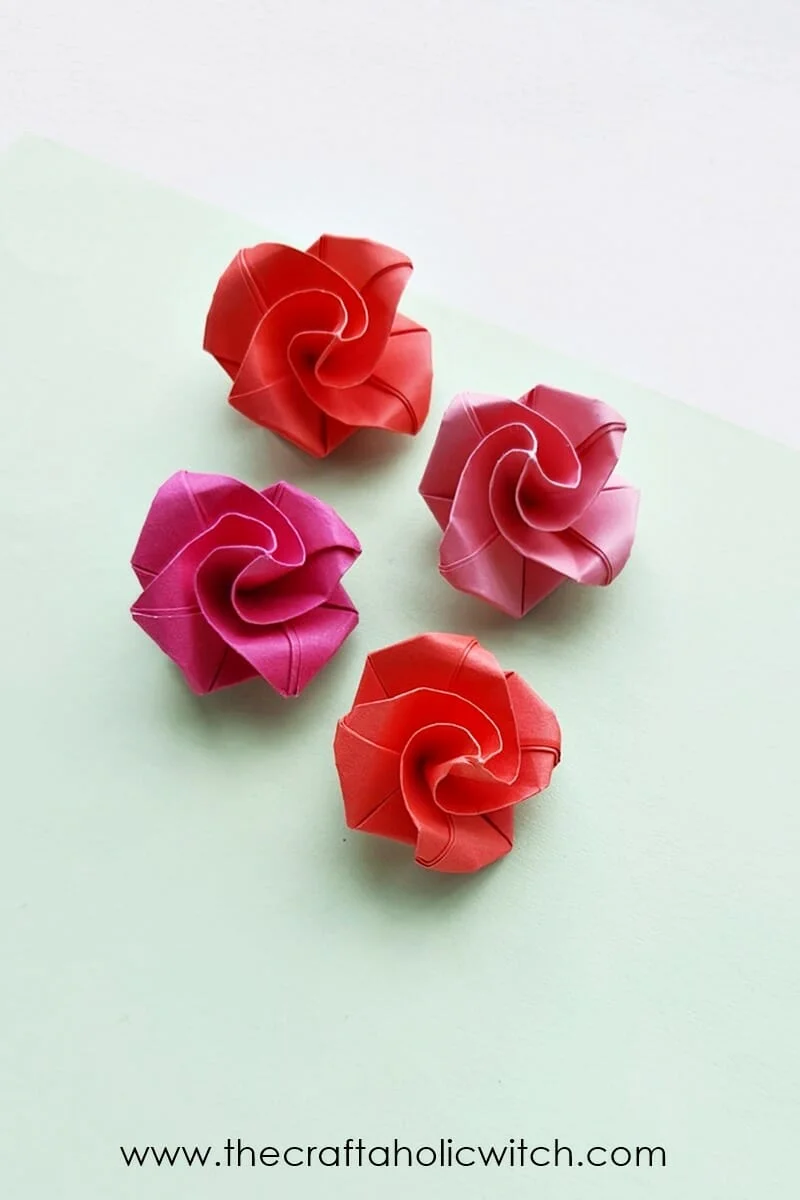
How to Make an Origami Rose in Bloom
Materials
- Square colored craft paper (6×6 inches or 8×8 inches recommended, 65-80 lb weight) – lighter paper tears easily during the final twist, while cardstock is too stiff to create the delicate rose petals. Choose red, pink, or traditional rose colors for realistic looks. (Alternative: cut standard printer paper into squares, though it won’t hold creases as crisply)
- Sharp scissors – dull scissors create uneven edges that show in the final rose
Watch the Video Tutorial First
Since this origami rose has some complex folding techniques, we strongly recommend watching the complete video tutorial before you start folding. This is not an easy tutorial to follow on the first try, so seeing the entire process in motion will help you understand what each step should look like.
Step-by-Step Instructions: Blooming Origami Rose
Step 1: Make the Basic Fold Lines
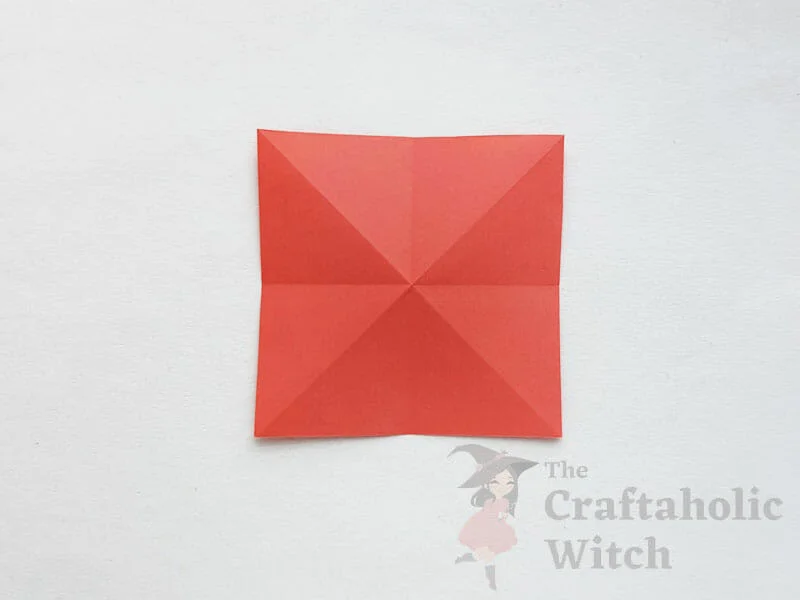
Take your square paper and fold it in half vertically, crease firmly, then unfold. Fold it in half horizontally, crease, then unfold. You should now have a plus sign (+) crease pattern on your paper.
Flip the paper over to the other side. Fold it diagonally corner to corner, crease well, then unfold. Fold diagonally the other way, crease, then unfold. Your paper should now have both straight and diagonal crease lines forming a star pattern.
Pro Tip: Make your creases as sharp and precise as possible. Run your fingernail along each fold. These initial creases are the foundation of your entire rose, and neat creases make the rest of the process much easier.
Step 2: Collapse the Paper into a Star Shape

Push the diagonal creases upward while pushing the straight creases inward. The paper will naturally want to collapse into a four-pointed star shape. Gently guide it into this position.
Don’t force it. The creases you made in Step 1 should guide the paper to collapse naturally into the star formation.
Step 3: Press the Star Flat into a Triangle
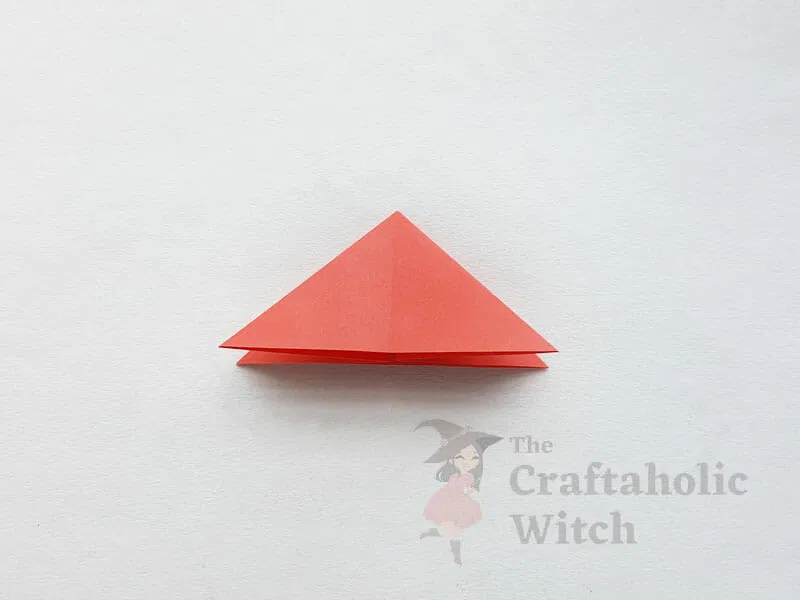
Bring the four points of the star together and flatten the entire shape. You’ll end up with a layered triangle with a point at the top and a folded edge at the bottom. Make sure all layers are aligned neatly.
Common Mistake: Some layers might stick out unevenly. Take a moment to align all edges before pressing flat.
Step 4: Fold the Bottom Corners Up to the Top
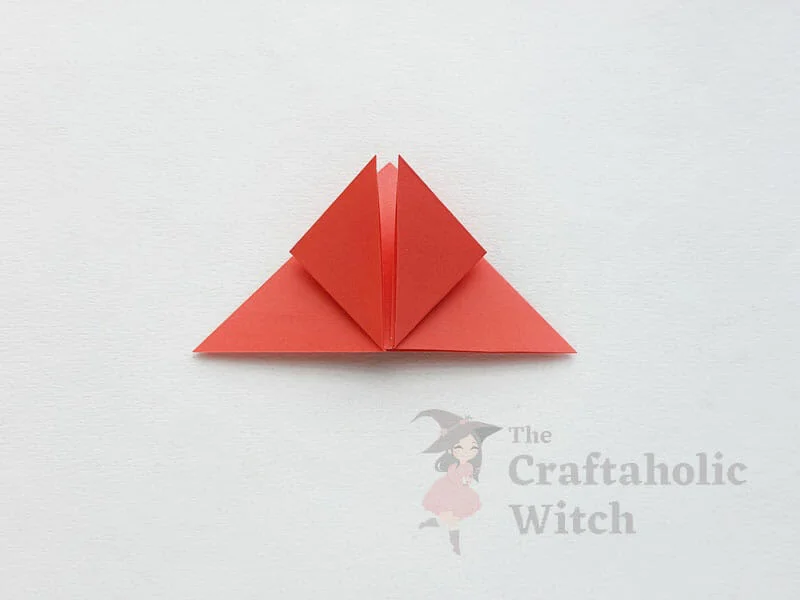
Working with just the top layer, fold the bottom left corner up to meet the top point of the triangle. Crease well. Repeat with the bottom right corner. You should now have a diamond shape on the top layer.
Make sure you’re only folding the top layer at this stage, not all layers together.
Step 5: Open the Corner Pocket
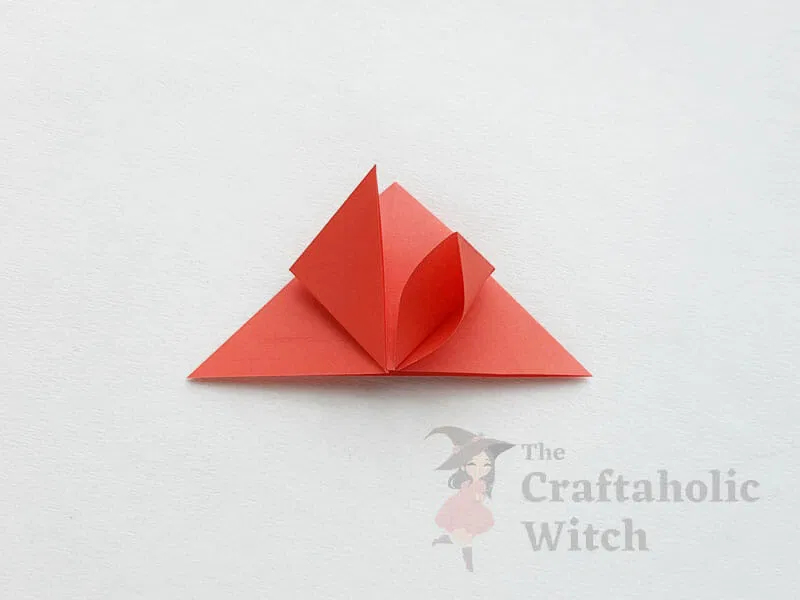
Look at one of the corners you just folded up. You’ll notice it has a pocket on the inner side. Gently slip your finger into this pocket to open it up.
This is one of the trickier steps. Be patient and gentle. The pocket is definitely there, even if it’s hard to find at first.
Step 6: Press the Pocket Down into a Square
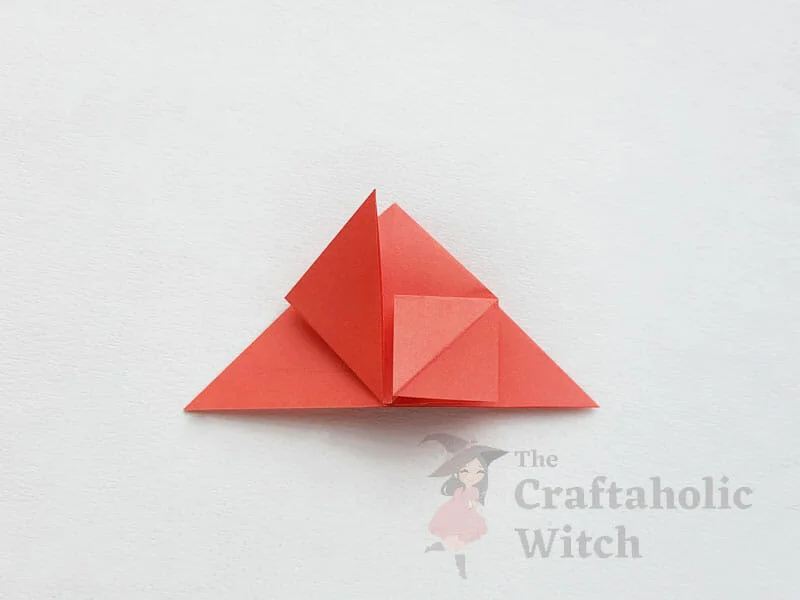
Once the pocket is open, press the top corner of the pocket down to meet the bottom center of your current shape. Flatten this pocket completely. It will form a small square shape with a diagonal crease.
This technique is called a “squash fold” in origami. You’re essentially turning a triangular flap into a square flap.
Step 7: Do the Same on the Other Corner
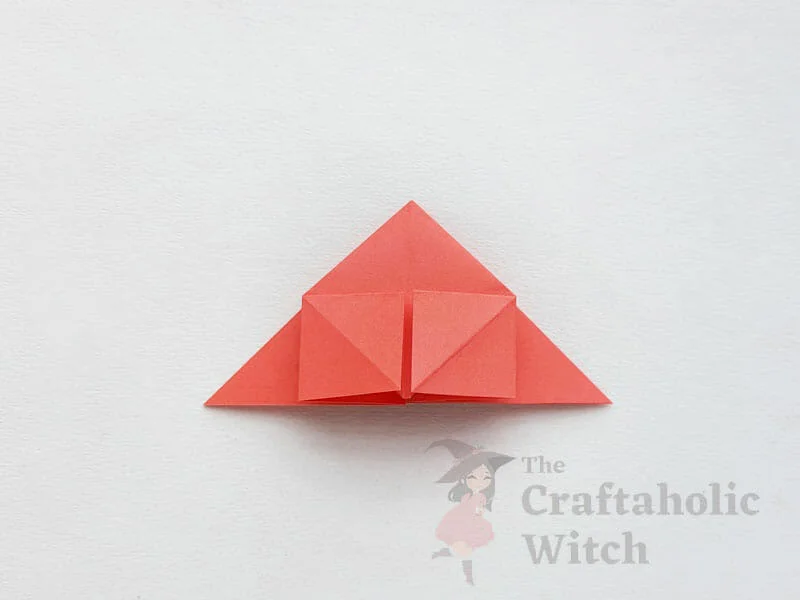
Repeat Steps 5-6 on the other folded corner. Find the pocket, open it gently, and flatten it into a matching square shape. Your shape should now have two square sections flanking a center triangular section.
Pro Tip: Both squares should look identical and be the same size. If one looks different, unfold it and try again. Symmetry matters here.
Step 8: Fold Three Corners Up Toward the Top
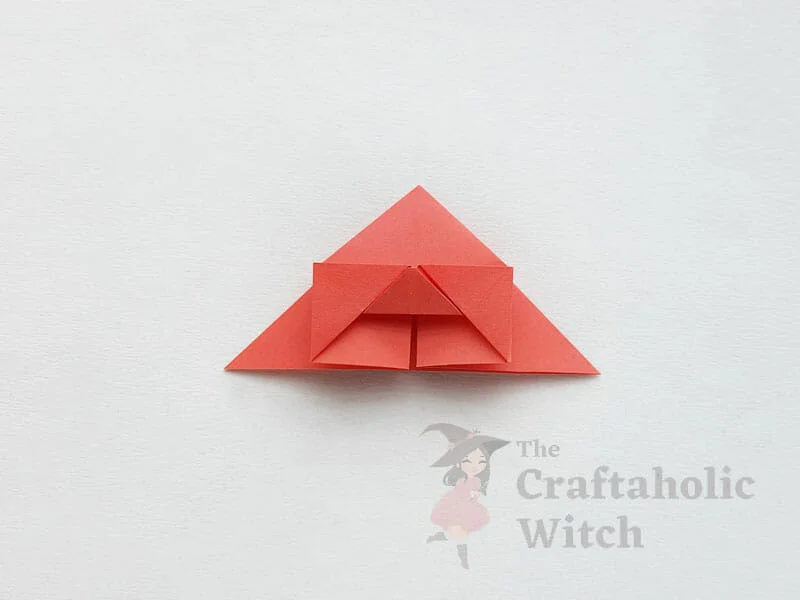
You should now see three distinct sections with corners. Fold the bottom left corner up to meet its opposite diagonal corner. Fold the bottom right corner up to meet its opposite diagonal corner. Fold the bottom center corner halfway up toward its top point (this one doesn’t go all the way).
These folds create the foundation for the rose petal shapes that will emerge later.
Step 9: Turn Over and Fold the Same Way
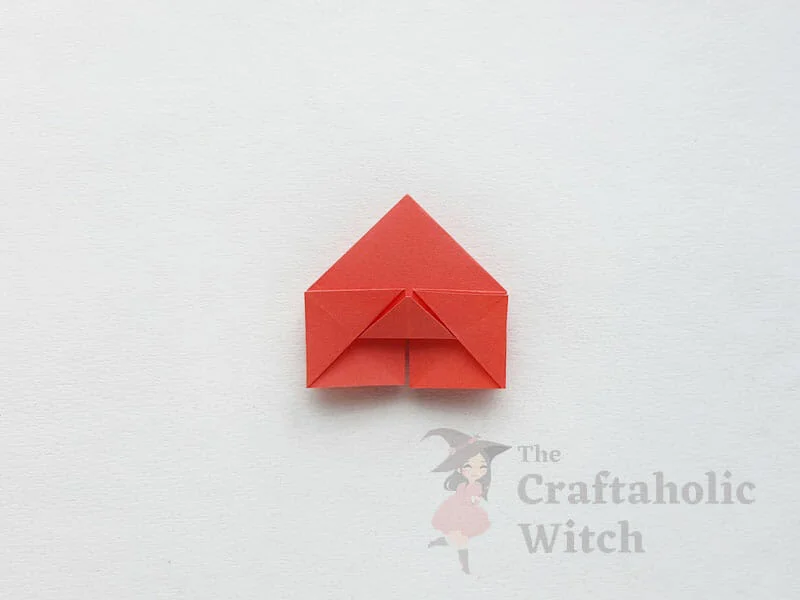
Turn your entire shape over to the other side. You’ll see the same pattern. Repeat Step 8 on this side – fold up all three corners in the same way.
Consistency matters here. Try to make both sides as symmetrical as possible.
Step 10: Move the Layers from Side to Side
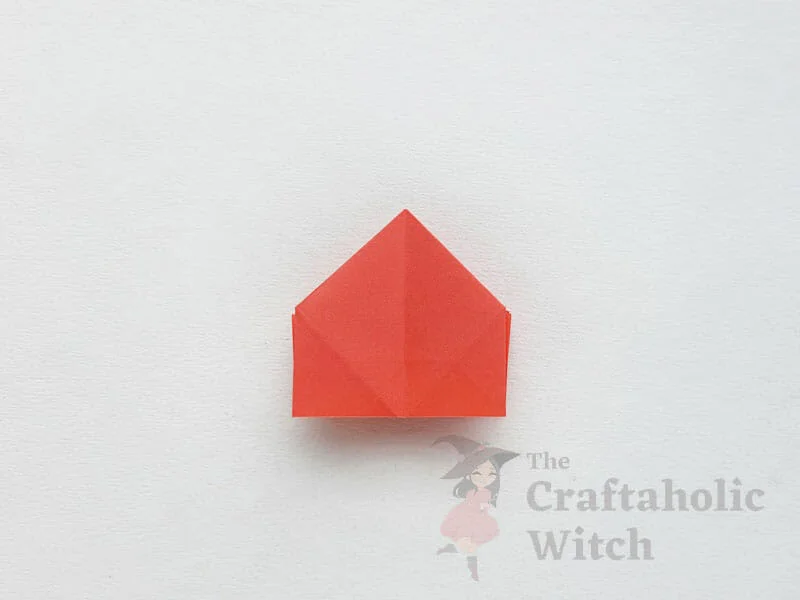
Your shape should have two flaps on the left side and two on the right side. Take the top left flap and flip it over to join the right side. Then take the bottom right flap and flip it over to join the left side. You’re essentially redistributing the layers.
Think of this like flipping pages in a book. You’re just moving layers from one side to the other.
Step 11: Fold the Two Side Corners Inward
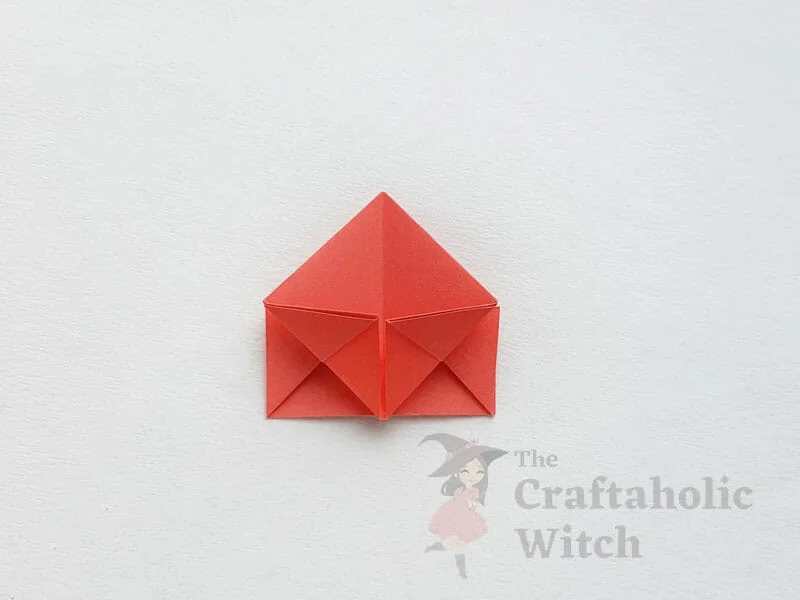
Fold the bottom left corner upward and inward. Fold the bottom right corner upward and inward. These folds angle inward rather than straight up.
This step begins shaping the base that will become the bottom of your rose.
Step 12: Fold the Center Bottom Point Up
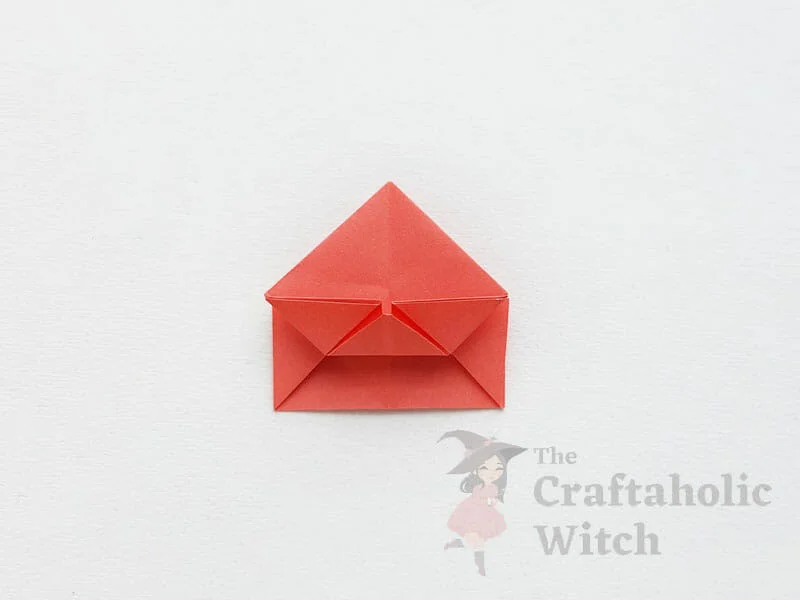
Fold the bottom center point upward. This fold joins with the folds you made in Step 11 to completely close the bottom area.
Step 13: Flip Over and Make the Same Three Folds
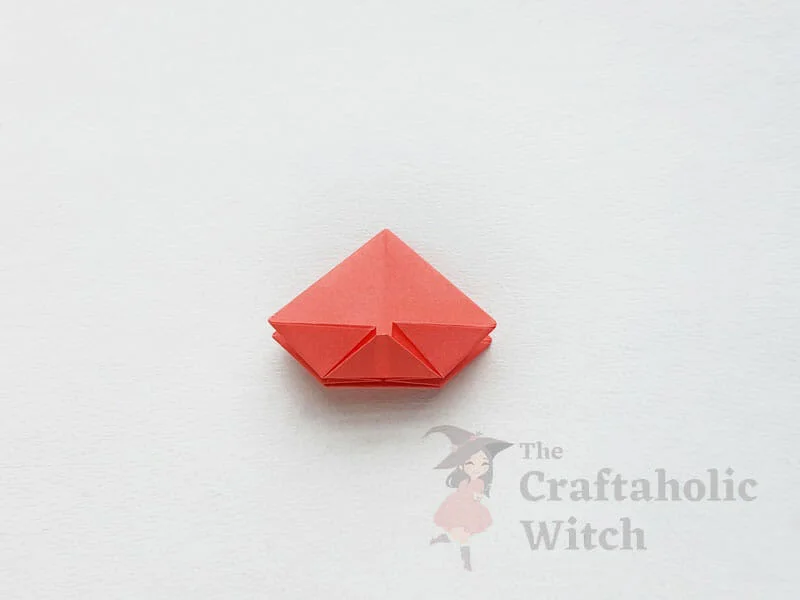
Turn the entire shape over. Repeat Steps 11-12 on this side – fold the two outer corners inward and up, then fold the center bottom point up.
Your shape should now be closed at the bottom with all the folded sections on the inside.
Step 14: Carefully Pull the Bottom Layers Apart
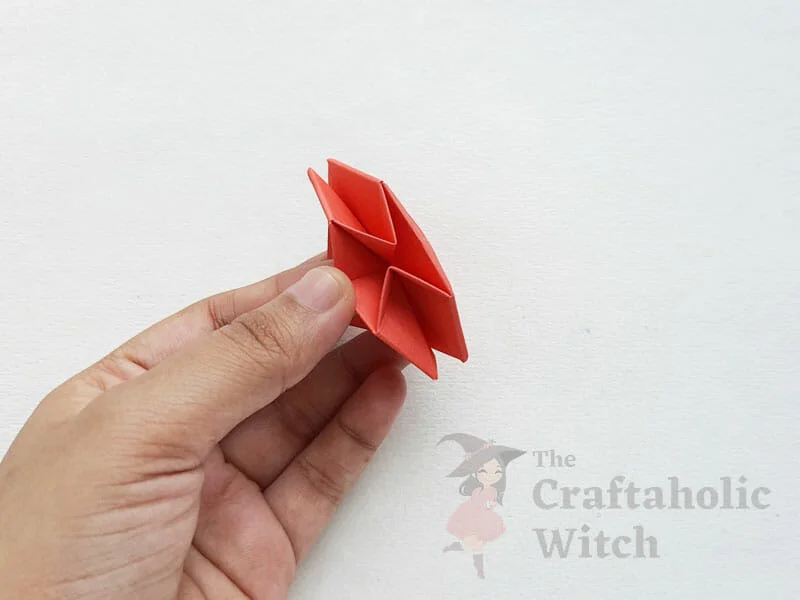
Hold your shape in your hands with the bottom facing you. Gently pull apart the bottom layers to open up the base. Be careful not to tear the paper as you spread it open.
Important: Go slowly here. If you feel resistance, don’t force it. Gently work the layers open little by little.
Step 15: Press the Bottom Completely Flat
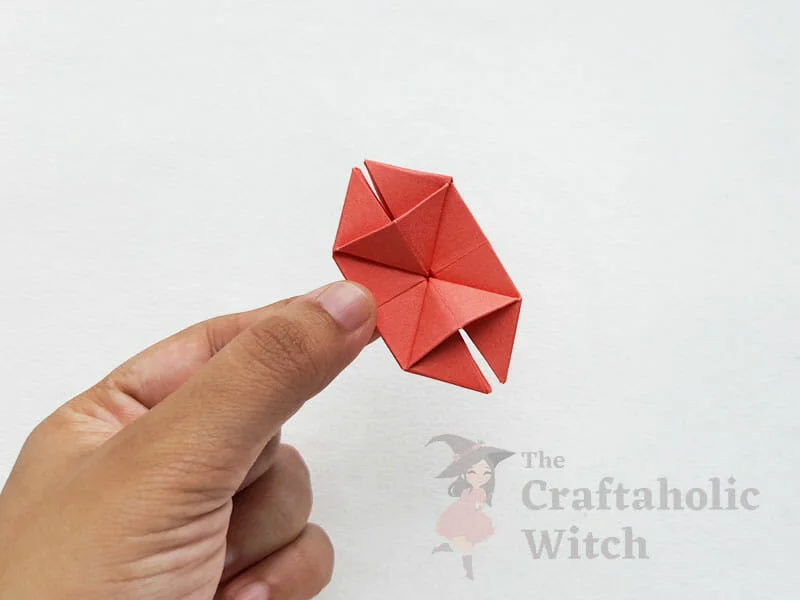
Continue opening the bottom until it lies completely flat. You should now have a flat square base at the bottom with all the folded layers emerging from the top.
This flat base will be the bottom of your rose and helps it stand upright or be glued to cards.
Step 16: Place Your Fingers Between Each Layer
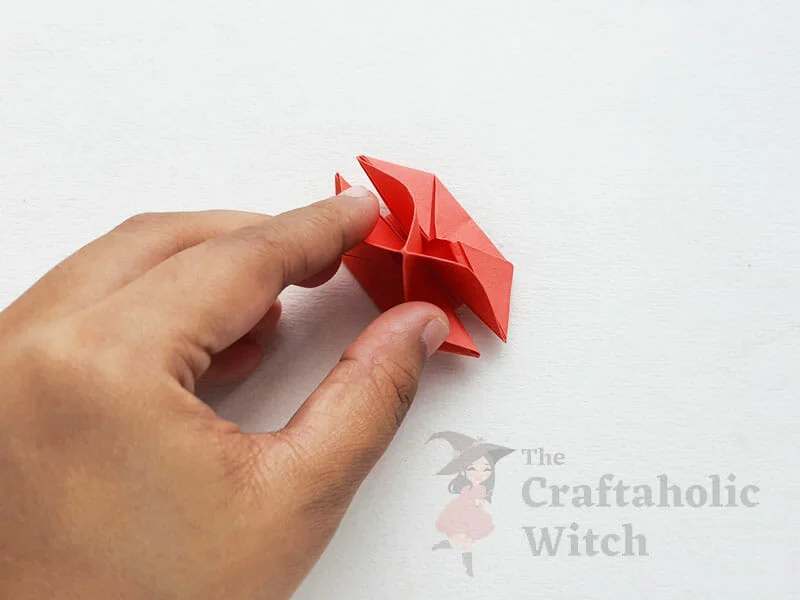
Turn your shape over so the top is facing you. You’ll see a criss-cross pattern with multiple layers radiating from the center. This is the rose bloom waiting to be formed.
Finger Positioning: Place one finger from your dominant hand into the gap between each pair of layers. Your fingers should be evenly spaced around the center like numbers on a clock (imagine 12, 3, 6, and 9 o’clock positions). Push your fingers down about halfway into these gaps, not all the way to the bottom.
You should have four fingers positioned in the gaps between layers. Your thumb can rest on top or stay out of the way.
Step 17: Hold the Base Still and Twist the Top Clockwise
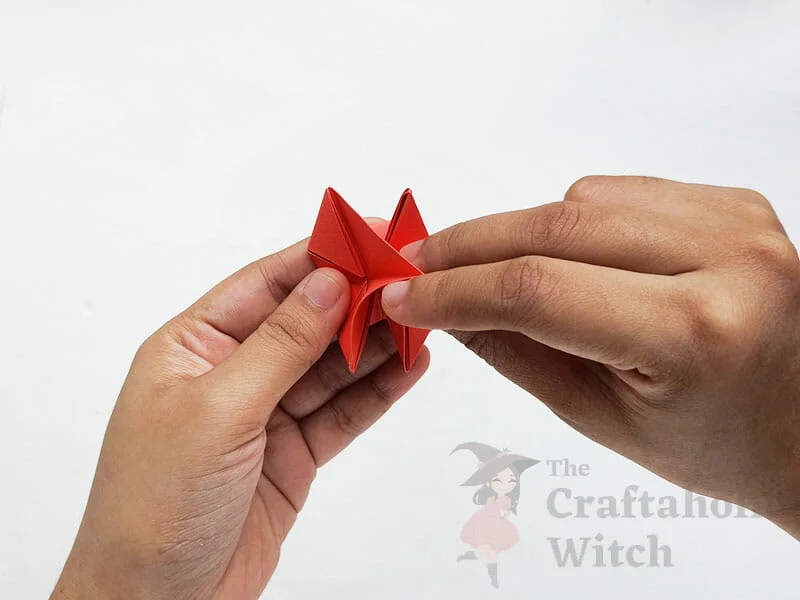
This is the make-or-break step. Read completely before starting.
How to Hold the Base (NON-DOMINANT HAND):
- Pick up the entire shape and flip it so the flat square base you created in Step 15 is facing your palm
- Pinch the flat base firmly between your thumb and fingers (thumb on top of the base, fingers underneath)
- Your grip should be firm enough that the base cannot rotate at all, but not so tight that you crush the paper
- Keep this hand completely still and motionless throughout the entire twisting process
- Think of this hand as a vise – it anchors everything
How to Twist (DOMINANT HAND):
- With your four fingers still positioned in the gaps between the top layers, begin rotating your hand clockwise (turn your wrist to the right)
- Apply gentle, even pressure with all four fingers simultaneously
- The layers will begin to spiral and wrap around each other
- Twist slowly and steadily – this should take 5-10 seconds, not a quick snap
What You Should Feel:
- Smooth, gradual movement with slight resistance
- All four sections moving together in harmony
- The base staying completely motionless in your other hand
Warning Signs to STOP:
- Any tearing sound or sensation – you’re twisting too hard
- The base rotating in your anchor hand – grip it more firmly
- One section moving faster than others – reposition your fingers evenly
- Sharp resistance – the paper may be catching on itself, gently reverse slightly and try again
Pro Tip: If you’re struggling, try this: hold the base flat on a table with your non-dominant hand pressing firmly down. Use your dominant hand to twist from above. This gives you more control and stability.
Step 18: Finish the Twist and Shape Your Rose Petals
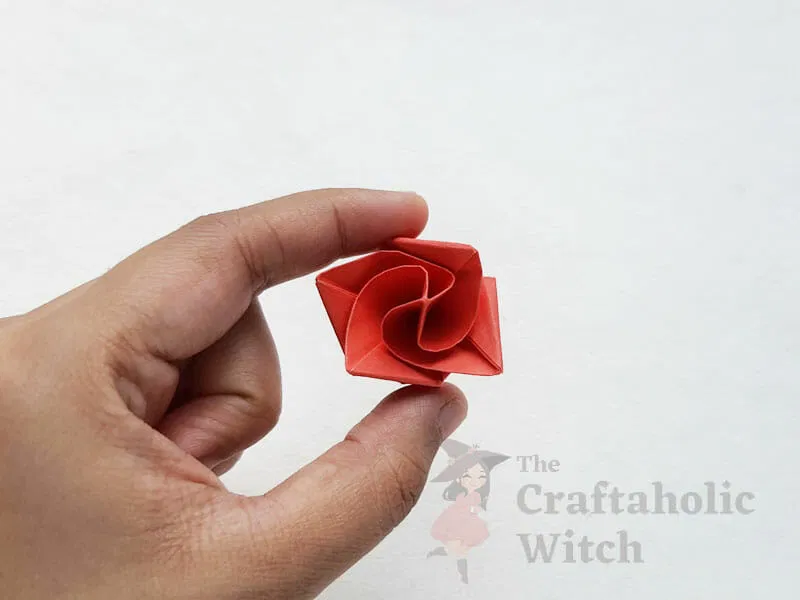
Continue the twisting motion until you’ve rotated approximately 90 degrees (a quarter turn). The layers will naturally lock into a spiral pattern and the rose will be in full bloom. You’ll feel the paper settle into its final position.
Final Shaping:
- Release your grip on the base but keep holding it steady
- Use your free hand to gently separate and arrange the petal layers
- Work from the outside toward the center, pulling each layer slightly outward for fullness
- Adjust the spacing between petals so they spiral evenly around the center
- The center should form a tight bud with petals gradually opening outward
Important: Don’t pull or tug any individual petal too hard or it might tear from the center. Gentle adjustments with your fingertips are all you need. If a petal layer feels stuck, don’t force it – leave it as is.
Congratulations! Your first origami rose might not be perfect, but that’s completely normal. The second one will be better, and by the third, you’ll have the twisting technique mastered. Each rose you make will be easier than the last.
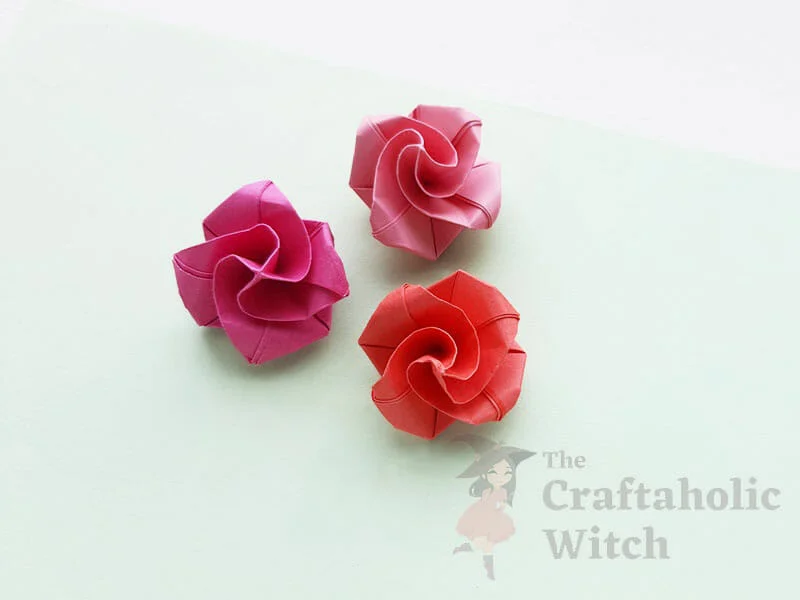
Pro Tips for Perfect Origami Roses
Paper Size Matters – Start with 8×8 inch squares if you’re a beginner. Larger paper is easier to manipulate and fold accurately. Once you’ve mastered the technique, try smaller sizes for delicate bouquets. Paper smaller than 4×4 inches becomes extremely difficult to twist at the end.
The First One Is Practice – Your first rose probably won’t be perfect, and that’s completely okay. I’ve made hundreds of origami roses, and I still occasionally mess up. Grab 3-4 sheets of paper before you start and plan for practice rounds.
Crease with Authority – Every fold needs to be sharp and precise. Run your fingernail along each crease to really set it. Weak creases in the beginning make the final twist difficult or impossible. Think of creases as the structure of your rose.
The Twist Is Everything – Steps 16-18 are the most complex part of this entire project. The final twisting motion makes or breaks your rose. Read Step 17 completely before attempting it. Hold the base like a vise with your non-dominant hand (thumb on top, fingers underneath, pinching firmly). Keep this hand frozen and motionless. Use your dominant hand to twist slowly clockwise over 5-10 seconds. If you feel any tearing sensation, stop immediately and loosen your grip slightly on the twisting hand (but keep the base hand firm). The paper should rotate smoothly with gentle resistance, not fight against you.
Color Creates Mood – Red roses are classic and romantic, pink is sweet and feminine, white is elegant and pure, yellow is cheerful and friendly. For a modern look, try deep burgundy, coral, or even black paper. Metallic paper creates stunning formal roses.
Make a Bouquet – Single roses are beautiful, but a bouquet of 5-7 paper roses in varying sizes creates a stunning centerpiece. Mix colors or stick to monochrome for different effects. Add origami leaves for extra realism.
Practice the Troublesome Steps – This origami rose has two complexity peaks where most people struggle:
- Steps 5-6 (finding and opening the hidden pockets) – This is a tricky visualization challenge. If you can’t find the pocket, unfold that corner and refold it slowly while watching where the layers separate.
- Steps 16-18 (positioning fingers and twisting the rose) – This requires coordination between both hands doing opposite things. One hand must stay absolutely still while the other rotates smoothly.
Practice these specific sections with scrap paper before using your good paper. Once you master these two stages, the entire rose becomes much easier.
Use the Right Paper – Standard printer paper works in a pinch but doesn’t hold creases as well as craft paper. Origami paper is ideal but any medium-weight craft paper will do. Avoid tissue paper (too flimsy) or heavy cardstock (won’t twist properly).
Know Where You Are in the Process – If you get confused or lose your place, check these landmarks:
- After Step 3, you should have a layered triangle shape
- After Step 7, you should see two square sections with a center triangle between them
- After Step 10, the layers should be evenly spread out on both sides
- After Step 15, you should have a flat square base at the bottom of your shape
- After Step 18, you should see spiral petals forming a beautiful rose bloom
Share Your Origami Roses!
We absolutely love seeing your creative interpretations! When you complete your origami rose, share it on social media and tag us with #thecraftaholicwitch so we can celebrate your creativity.
Your paper roses might even inspire other crafters to try this stunning project!
Creative variations we’d love to see:
- Different color combinations (ombre roses, rainbow petals)
- Size variations (tiny roses vs giant statement flowers)
- Mixed bouquets with other origami flowers
- Roses attached to gift packages or cards
- Creative display ideas (shadow boxes, wall art)
You lost me at step ten. I have no idea what that step is asking me to do.
Hello, so sorry for the confusion. I have updated the step’s written instructions, let me know if it’s clear now.
Step #10 is super confusing. I have no idea how to get past it.
No worries, you can check out our origami rose video tutorial from our YouTube channel.
This is great! Easy but elegant! wish it was a bit more detailed but after a few try’s its super easy!
Glad to know that! In case of confusion, you can check out our YouTube channel. Thanks!
I did it! its so pretty
While making these with my dad, each one he completed the rose they would slowly start expanding and flip outward. The ‘flat’ bottom wants to be in its original form. I can’t figure out what the problem is (when I make them they turn out fine). Do you have any idea of what could be going wrong?
Use lightweight/ thin craft paper. If it still doens’t stay, use a bit of glue on the twisted parts.