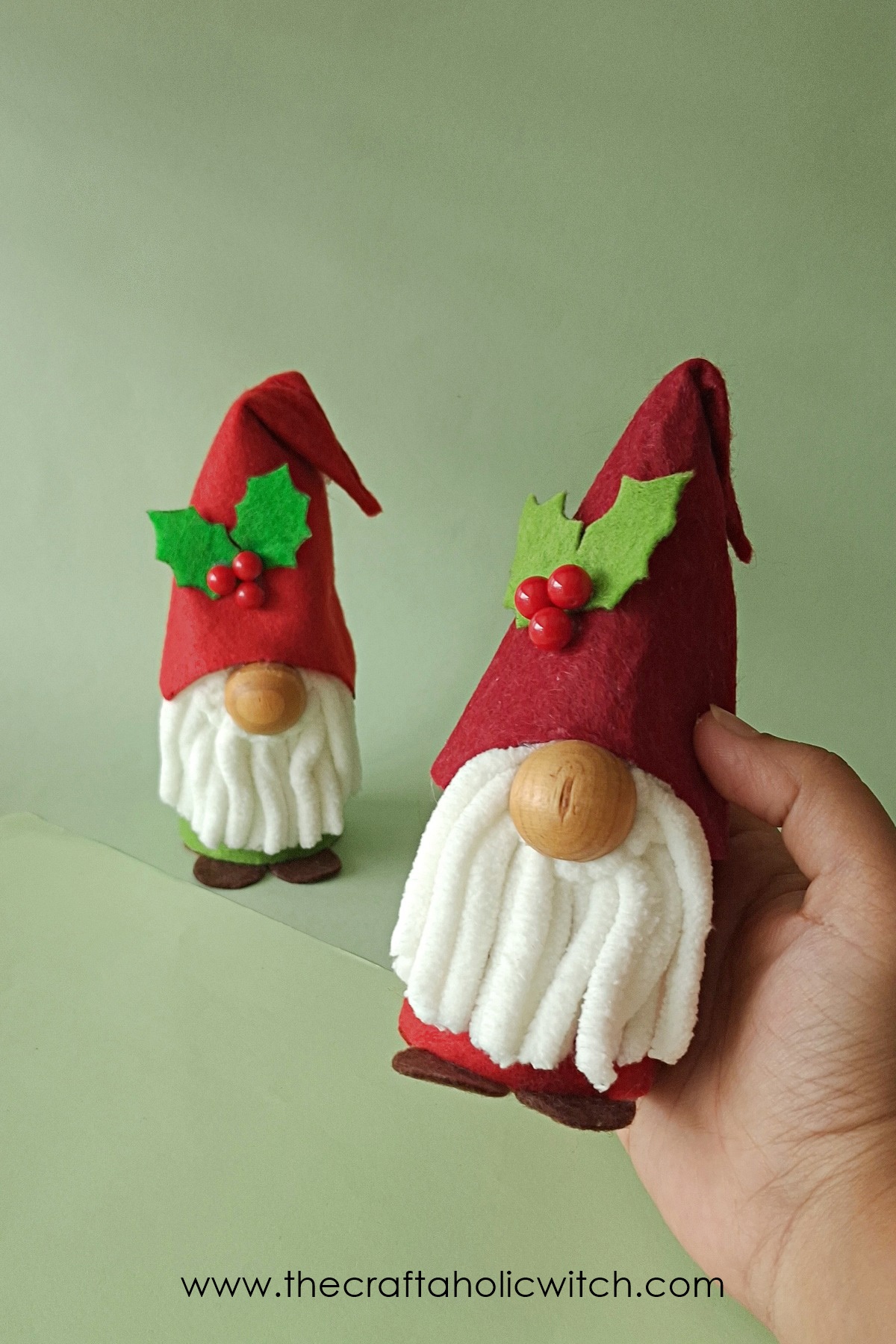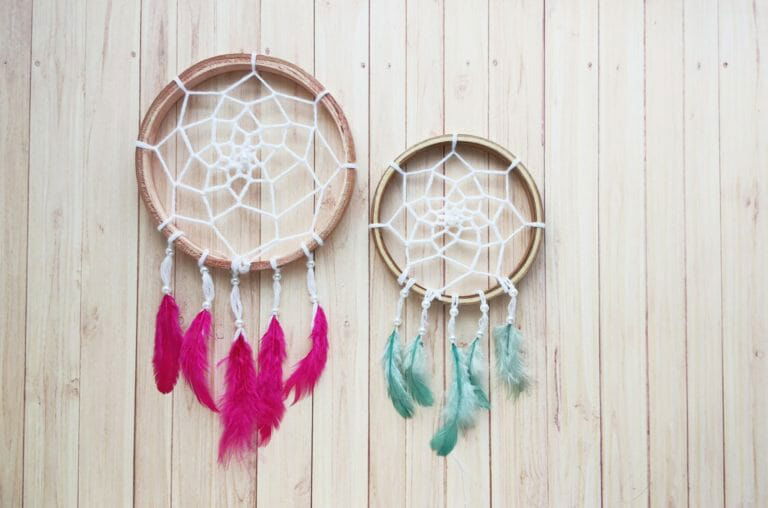

I make gnomes for literally every occasion. St. Patrick’s Day? Made a gnome. Fall decorating? Obviously made gnomes. My shelf is basically a gnome museum at this point. So when people ask me how to make a gnome for beginners, I always point them to this Christmas version because it’s honestly the easiest one to start with.
This felt and cardboard Christmas gnome doesn’t require sewing, fancy tools, or complicated techniques. Just cutting, gluing, and tying some simple knots for the beard. If you’ve never made a gnome before, this is your perfect first project.
In this tutorial, I’ll show you exactly how to make a Christmas gnome doll for beginners using felt, cardboard, and yarn. This step-by-step gnome craft is perfect for parents crafting with kids ages 6 and up because it teaches real skills like cutting shapes, following sequences, tying basic knots, and making creative decisions about colors and decorations.
These finished gnomes work beautifully as Christmas mantel decorations, handmade gifts for grandparents, or even festive gift toppers. Plus, we’ve included a free printable template and complete video tutorial so you can’t mess this up.
Project Specifications
- Difficulty Level: Beginner-friendly (perfect first gnome project, no sewing required)
- Cost: Under $4 (uses felt scraps, cardboard, and yarn you probably already have)
- Time: 30-40 minutes per gnome
- Ages: 6+ years with adult help.
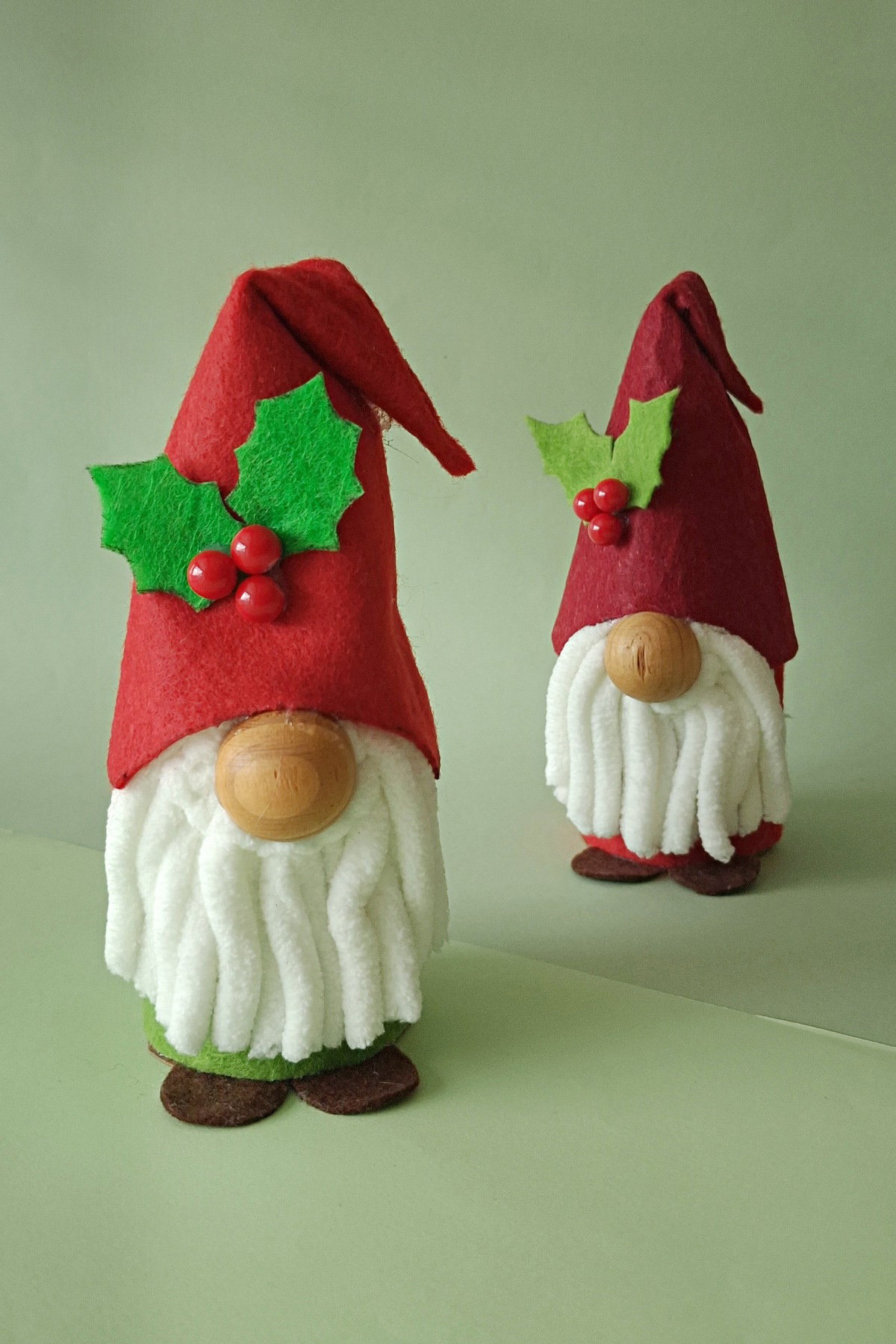
How to Make A Gnome Doll for Christmas
Things You’ll Need
Materials
- Felt fabric in red, white, tan, and green (9×12 inch sheets). You’ll use red for the hat, white or tan for clothing, and green for decorative leaves.
- Cardboard (cereal box thickness or slightly thicker). This forms the gnome’s body structure. Too thin and it won’t stand up straight. Too thick and you can’t roll it into a cylinder.
- Thick yarn (worsted weight in white, cream, or light gray).
- Wooden bead (about 20mm diameter). This becomes the nose. You’ll cut it in half, so don’t use painted beads unless you want to see the raw wood inside.
- Small red beads (about 8-10mm). These become decorative berries on the hat. Regular craft beads work fine.
Tools
- Scissors (sharp fabric scissors for felt, regular scissors for cardboard). Dull scissors make felt edges look ragged.
- Hot glue gun with glue sticks. Low-temperature setting if your glue gun has it, especially when kids are helping. High-temperature glue works faster but can burn fingers and melt felt if you’re not careful.
- Pencil (for tracing the template). Don’t use pen because it shows through light-colored felt.
Please note that the provided links may include affiliate links, which means that if you make a purchase through them, we may earn a small commission.
Step by Step Instructions: Christmas Gnome Doll
Step 1: Cut Out All the Gnome Template Pieces
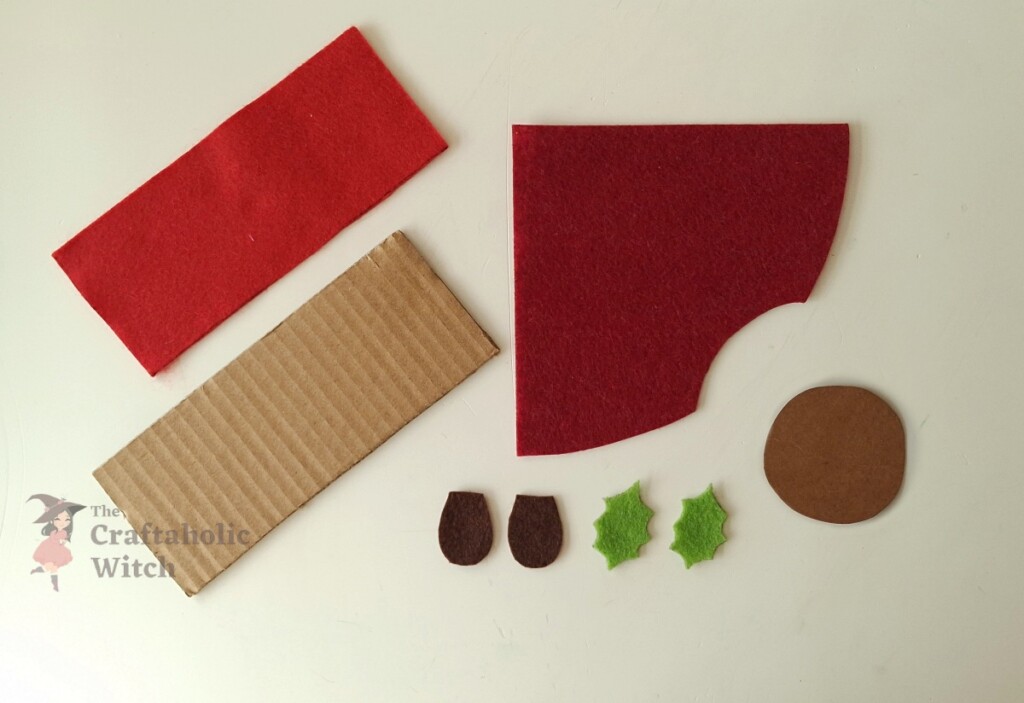
Download and print the free Christmas gnome template. Trace each template piece onto your materials: the rectangular body and circular base go on cardboard, while the hat, shoes, and clothing details go on felt. Cut out all pieces carefully with sharp scissors.
Your cardboard pieces need clean edges so they’ll roll and glue smoothly later. Take your time with the felt pieces too, especially the triangle hat shape, since wonky edges will show on the finished gnome.
Tip for Parents: Let kids practice tracing the template shapes first. They’re learning shape recognition and hand-eye coordination when they trace and cut. Younger kids (ages 5-7) can cut the felt pieces while you handle the thicker cardboard.
Step 2: Prepare the Nose and Decorative Elements
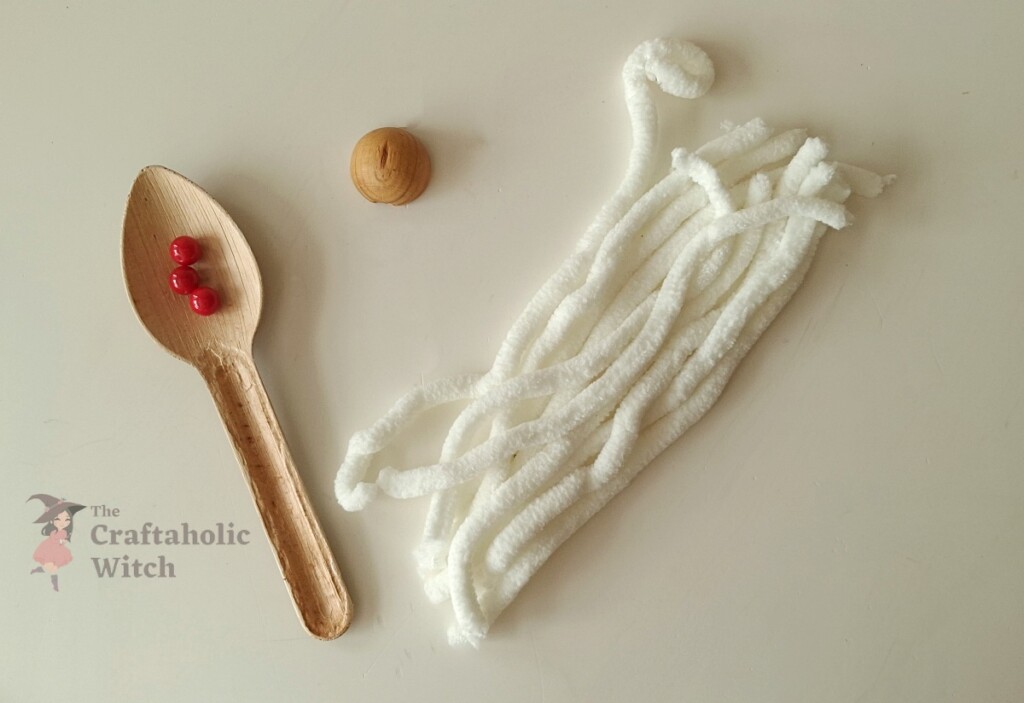
Gather your wooden bead and cut it in half using a craft knife (adults only for this part). This creates the gnome’s nose. Set out 3-4 red beads for the berry decorations and cut 15-20 pieces of thick yarn, each about 8-10 inches long, for the beard.
Step 3: Create the Gnome’s Cylindrical Body
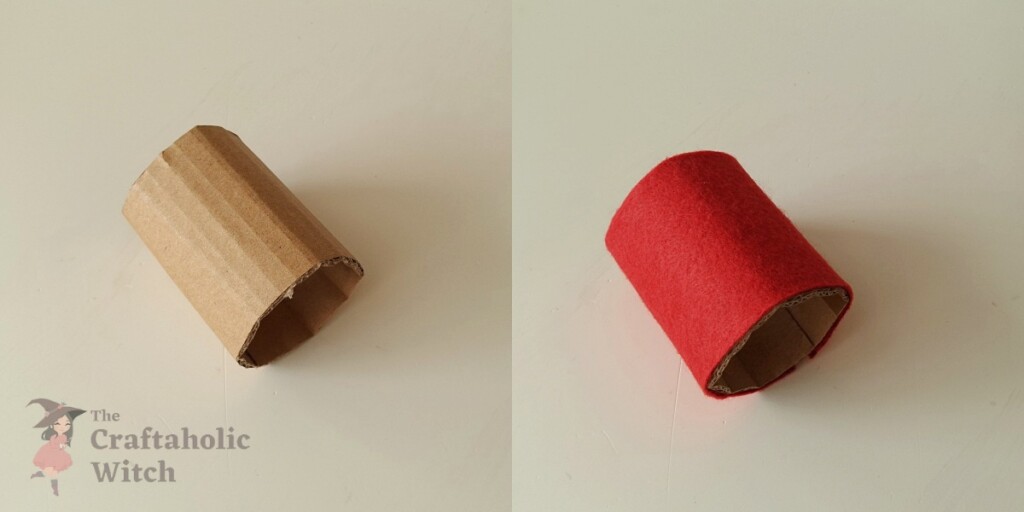
Take your rectangular cardboard piece and roll it lengthwise into a tube shape. The short edges should meet and overlap slightly (about 1/4 inch). Apply hot glue along one short edge and press the edges together firmly, holding for 10-15 seconds until the glue sets.
Now wrap your felt rectangle around the cardboard tube, starting at the seam. Apply small dots of hot glue as you wrap to secure the felt smoothly. Make sure the felt covers the entire cardboard surface with no gaps showing.
Tip for Parents: Rolling cardboard into cylinders teaches kids about 3D shapes and how flat materials become dimensional. They’re seeing geometry in action! Let them hold the cylinder and feel how the flat rectangle transformed into a tube.
Note: Don’t use too much glue or the felt will get lumpy. Small dots are way better than thick lines.
Step 4: Attach the Felt Shoes and Round Base
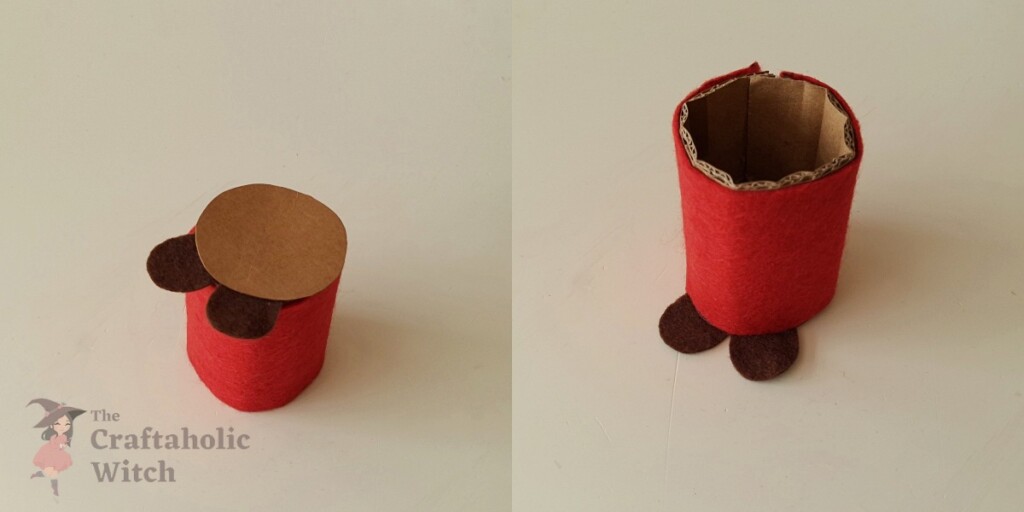
Apply hot glue to the flat edge of each felt shoe piece. Press them onto the bottom rim of the felt-covered tube, positioning them at the front so they stick out slightly like little feet. Space them about 1/2 inch apart.
Once the shoes are secure, flip the gnome upside down. Apply hot glue around the bottom opening edge of the tube and press the round cardboard base onto it. Hold firmly for 20-30 seconds to ensure a tight seal. Your gnome should now stand upright on its own.
Important: Make sure the base is centered, or your gnome will wobble instead of standing straight.
Step 5: Form the Cone-Shaped Hat
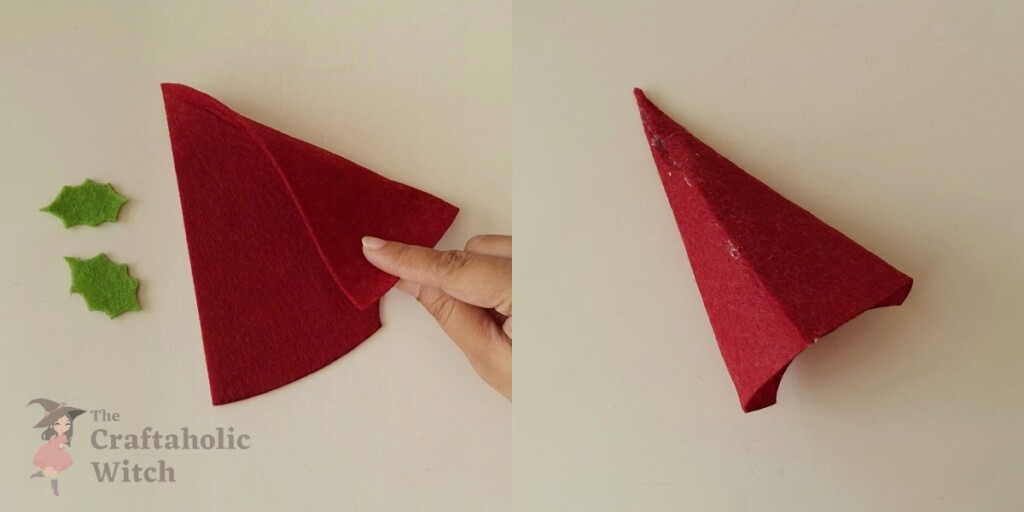
Take your triangular felt piece and bring the two straight edges together (not the long base edge). Apply a thin line of hot glue along one straight edge from the point to about halfway down. Press the other straight edge onto the glue, overlapping them slightly to form a cone shape.
Hold the seam closed for 15 seconds while the glue sets. You should have a pointy cone with an open bottom. Adjust the point at the top so it’s centered and not leaning to one side.
Pro tip: If your cone won’t hold its shape, you can gently stuff the point with a tiny bit of cotton or tissue to help it stand tall.
Step 6: Add Festive Hat Decorations
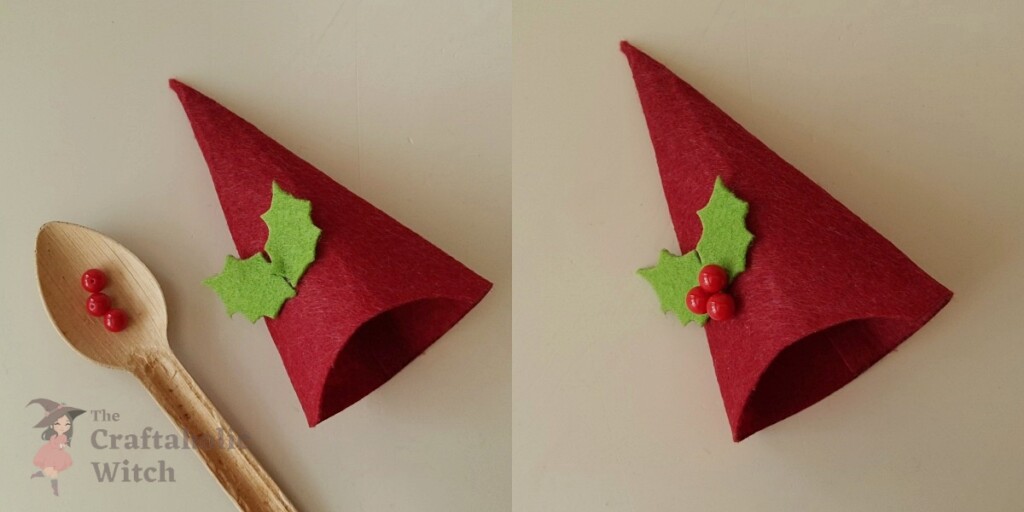
Cut out 2-3 small leaf shapes from green felt (about 1 inch long each). Arrange them on one side of the hat in a small cluster, near the base or slightly toward the tip. Glue the leaves in place with small dots of hot glue.
Now add your red beads on top of or next to the leaves to look like holly berries. Use just a tiny dot of glue for each bead so they don’t slide around.
Tip for Parents: Let kids choose where to place the decorations. There’s no wrong answer here! They’re making creative decisions and developing spatial awareness by figuring out what looks balanced.
Step 7: Start Building the Yarn Beard Base
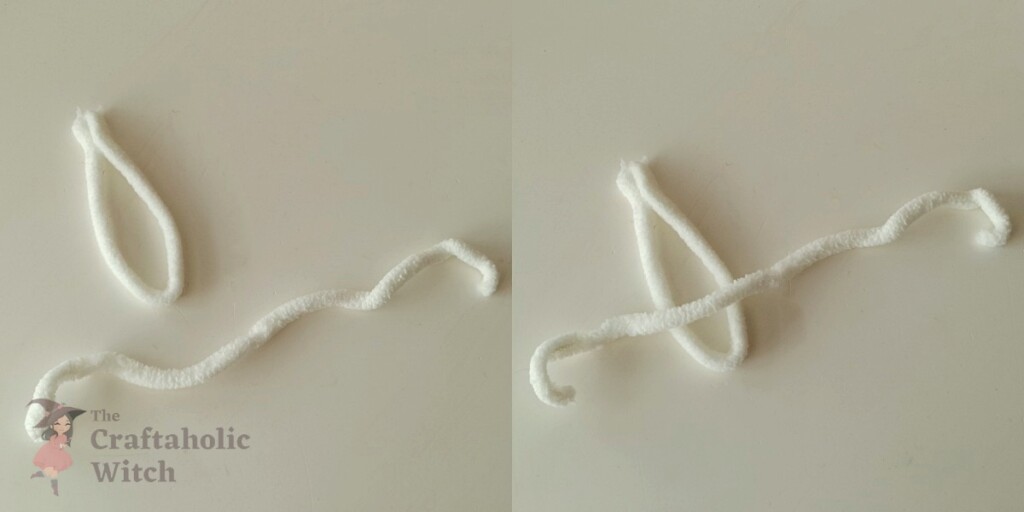
Lay one 8-10 inch piece of yarn horizontally flat on your work surface. This is your base strand. Take a second piece of yarn, fold it in half to create a loop at the top, and position it underneath the horizontal base strand so the loop sticks up above the flat yarn.
You’re creating a lark’s head knot, which is the foundation for the fluffy beard. The folded yarn should look like an upside-down U sitting under your horizontal strand.
Step 8: Tie Each Yarn Strand Using Lark’s Head Knots
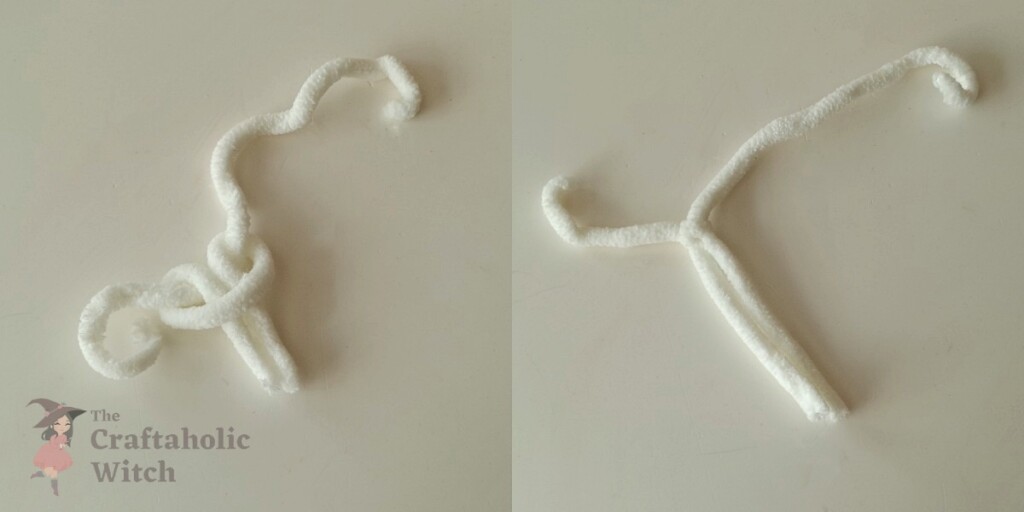
Bring the two loose ends of your folded yarn up and over the horizontal base strand. Now pull both ends through the loop you created. Pull the ends down gently but firmly to tighten the knot against the base strand.
You’ve just made your first beard strand! It should sit snug against the base yarn with the two loose ends hanging down.
Tip for Parents: This is a fantastic fine motor skill builder. Kids are learning to tie knots, follow a sequence, and create patterns. Show them the motion slowly first: up and over, then pull through the loop. They’ll get the rhythm after 2-3 tries.
Note: Don’t pull too tight or the base yarn will bunch up. Keep it snug but not strangling.
Step 9: Complete the Full Beard
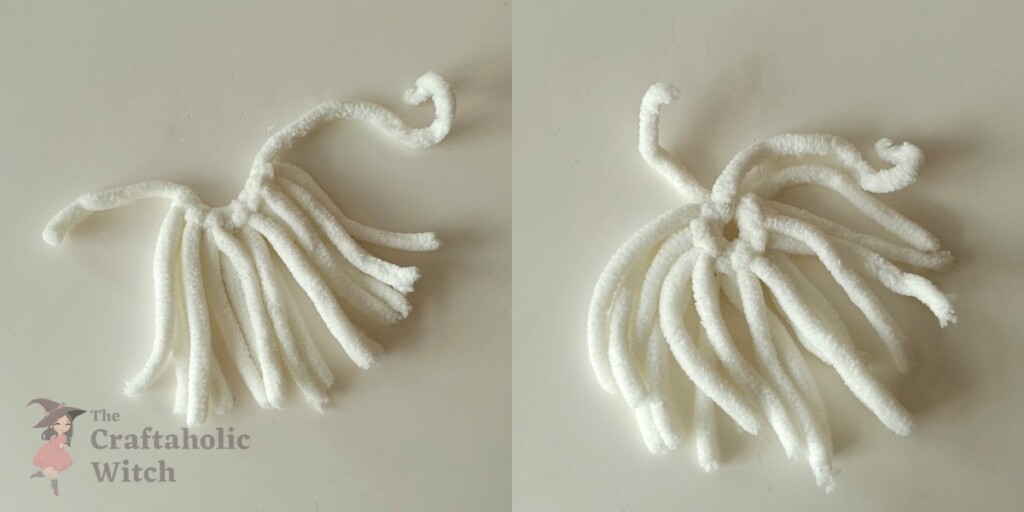
Repeat the lark’s head knot process with 12-15 more yarn pieces, spacing them close together along your base strand. The more yarn pieces you add, the fuller and fluffier your gnome’s beard will be.
Once you’ve added all your yarn strands, tie both ends of your base strand together in a simple double knot to secure everything. Your beard should look like a fluffy fringe on a string.
Pro tip: Aim for yarn pieces that are close together but not overlapping. Too much space and the beard looks sparse. Too tight and you can’t see individual strands.
Step 10: Attach the Beard and Wooden Bead Nose
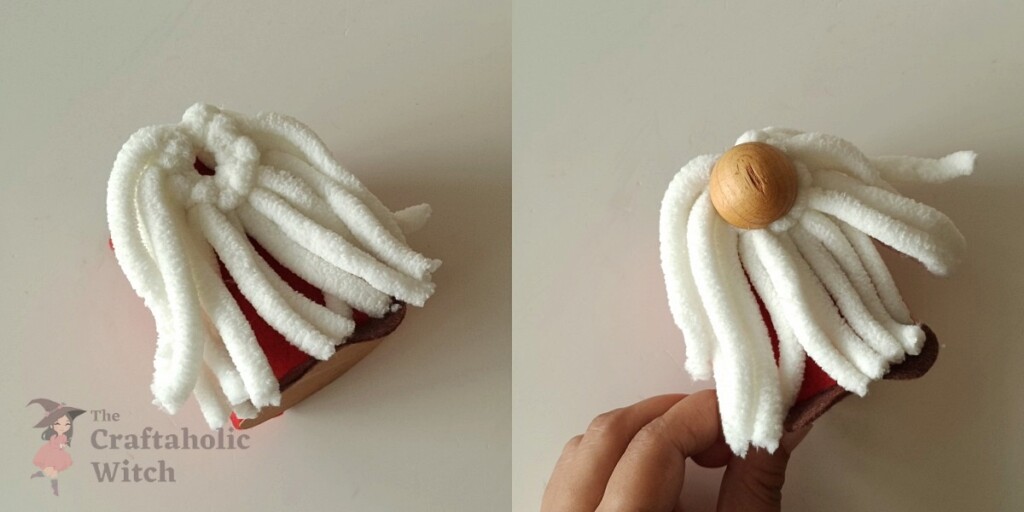
Apply a line of hot glue horizontally across the upper third of the gnome’s felt-covered body. Press your completed yarn beard onto the glue, positioning it so the base strand sits horizontally and all the fuzzy yarn pieces hang down. The beard should cover the upper body section.
Now take your half wooden bead (flat side facing you) and glue it right above the center of the beard where it attaches to the body. This creates the gnome’s cute little nose peeking out from the beard.
Important: Make sure the beard is level before the glue sets. A crooked beard makes the whole gnome look wonky.
Step 11: Trim the Beard and Add the Finishing Hat
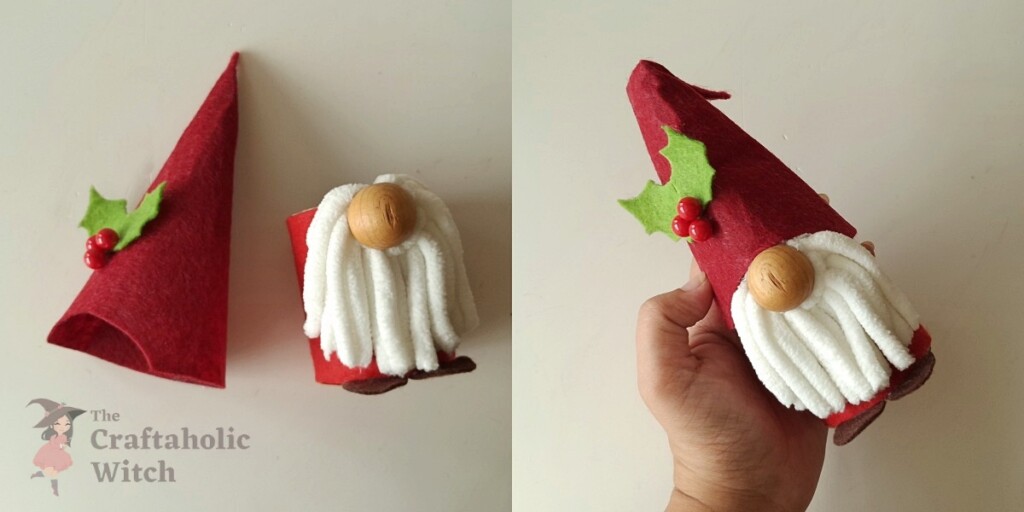
Use sharp scissors to trim the loose yarn ends so they’re all roughly the same length and create a neat, even edge. You can go for a long, flowing beard or trim it shorter for a different look. It’s totally up to you!
Finally, apply hot glue around the inside rim of your cone-shaped hat. Place it on top of the gnome’s head, positioning it so it sits slightly forward and covers the top of the wooden bead nose. Press gently to secure. Let the glue set for 30 seconds.
Adjust the hat angle if needed so it has that charming, slightly tilted gnome look. Your adorable Christmas Gnome Doll is now complete and ready to spread holiday cheer!
Tip for Parents: Trimming the beard teaches kids about symmetry and making design choices. Ask them: “Should we make it long and flowing, or short and neat?” There’s no wrong answer, and they’re learning that they have creative control over their final product.
Watch Complete Video Tutorial: DIY Christmas Gnome
If you love learning through visuals, we’ve got you covered! You can watch the step-by-step video tutorial for this adorable Christmas gnome doll on our YouTube channel. It’s beginner-friendly, detailed, and perfect for following along while you craft.
???? Click here to watch the full tutorial on YouTube! And while you’re there, don’t forget to subscribe to our channel for more easy Christmas crafts, paper DIYs, and festive handmade decor ideas every week! Your support helps us bring more crafty cuteness your way.
FAQ: How to Make a Gnome for Beginners
Q: Can I use regular fabric instead of felt for my first gnome?
I don’t recommend it for beginners. Regular fabric frays when you cut it, which means you need to hem the edges or use fabric glue to seal them. Felt doesn’t fray at all, so you can cut and glue without any extra steps. Plus, felt is way more forgiving if your cutting isn’t perfectly straight. Stick with felt for your first few gnomes, then experiment with fabric once you’ve got the hang of the process.
Q: What if I don’t have a hot glue gun?
You can use tacky glue or fabric glue, but the process takes way longer because you have to hold each piece in place while the glue dries. Hot glue sets in about 10 seconds, while white glue can take 5-10 minutes per piece. If you’re crafting with kids, that waiting time kills their patience and interest fast. Hot glue guns are pretty cheap (around $5-10) and they’re useful for tons of other crafts, so it’s worth grabbing one if you plan to do more projects.
Q: My gnome won’t stand up straight. What’s wrong?
Check three things: First, is the round base centered on the bottom of the tube? If it’s glued on crooked, the gnome will lean. Second, is the cardboard cylinder crushed or bent anywhere? If so, it can’t support the weight properly. Third, are the shoes glued on at weird angles? They should be at the front, parallel to each other. If one’s higher than the other, the gnome tips forward or backward.
Q: How do I make the beard fuller without using more yarn?
Space your lark’s head knots closer together on the base strand. Instead of leaving 1/8 inch between knots, go for 1/16 inch. You can also use slightly longer yarn pieces (10-12 inches instead of 8-10 inches) so the beard hangs fuller even if you use the same number of strands. Another trick is to gently fluff and separate the yarn strands after you’ve attached the beard to the body.
Q: Can younger kids (ages 4-5) make this gnome?
Yes, but they’ll need help with the hot glue steps and cutting the cardboard. Kids this age can definitely cut felt with safety scissors, tie the beard knots (with some coaching), and choose where decorations go. I’d suggest pre-cutting the cardboard pieces and pre-rolling the body tube for them so they can focus on the fun parts like decorating the hat and making the beard.
Q: What’s the best way to store these gnomes when Christmas is over?
Wrap each gnome in tissue paper to protect the beard and hat, then store them in a plastic container or cardboard box. Don’t stack heavy things on top because the cardboard body can get crushed. If you store them carefully, these gnomes last for years. My son’s gnomes from two Christmases ago still look great because we wrap them gently and keep them in a dedicated holiday decoration box.
Q: Can I make these gnomes in different sizes?
Absolutely! Just scale the template up or down on your printer before cutting out the pieces. A 75% scale makes adorable tiny gnomes perfect for Christmas tree ornaments. A 150% scale creates big statement gnomes for mantel displays. Just remember that if you go bigger, you’ll need more yarn for the beard and thicker cardboard to support the larger structure.
Q: My lark’s head knots keep sliding on the base strand. How do I fix this?
Pull each knot tighter after you tie it. The knots should grip the base strand firmly enough that they don’t slide when you tug gently on the hanging ends. If your yarn is super smooth or slippery, try using a slightly textured yarn instead. Acrylic worsted weight yarn with a bit of texture works better than silky cotton yarn for beards.
We absolutely love seeing first-time gnome makers succeed with this project! When you complete your Christmas gnome, share photos on social media and tag us with #thecraftaholicwitch so we can celebrate your creativity.
Creative variations we’d love to see:
- Gnomes in non-traditional colors like blue, purple, or pink
- Tiny mini gnomes using the scaled-down template
- Gnome families with different beard lengths and hat styles
- Gnomes decorated with bells, glitter, or snowflake embellishments
Final Thoughts
Learning how to make a gnome for beginners is more than just following a craft tutorial. It’s a chance for kids to build real skills like fine motor control with cutting and gluing, pattern-following with the step-by-step instructions, and creative decision-making when they choose colors and decorations. Plus, they end up with something they’re genuinely proud to display or give as a gift.
As a mom and craft enthusiast, I love this gnome project because it’s genuinely beginner-friendly without being babyish. Kids aren’t making something that screams “a six-year-old made this.” They’re creating an actual decoration that looks intentional and cute. That sense of accomplishment? That’s what builds lifelong confidence in their creative abilities.
So grab some felt, print that free template, and watch your kids’ faces light up as their fuzzy Christmas gnome comes to life!
Keep crafting, keep learning, and keep creating those precious memories!
Happy Crafting!